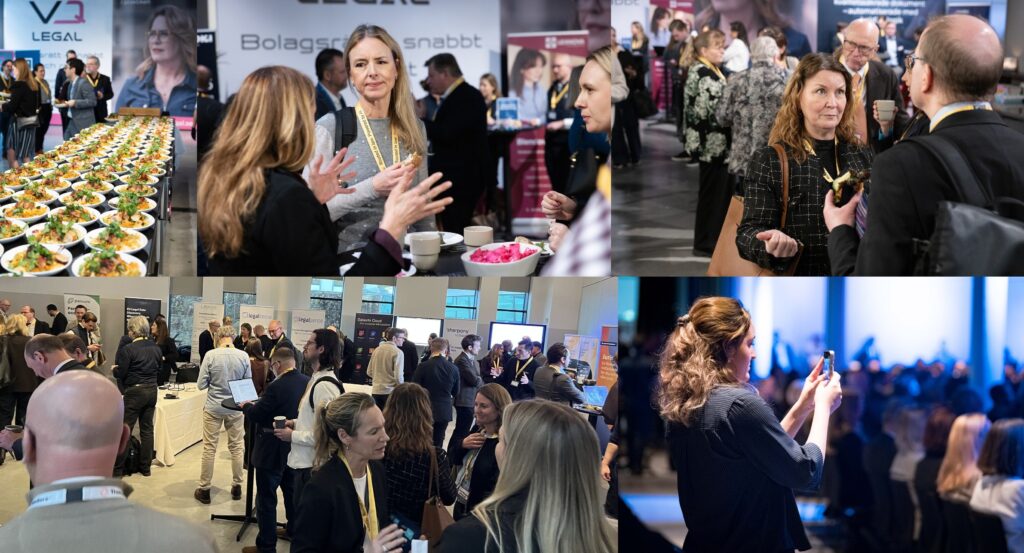
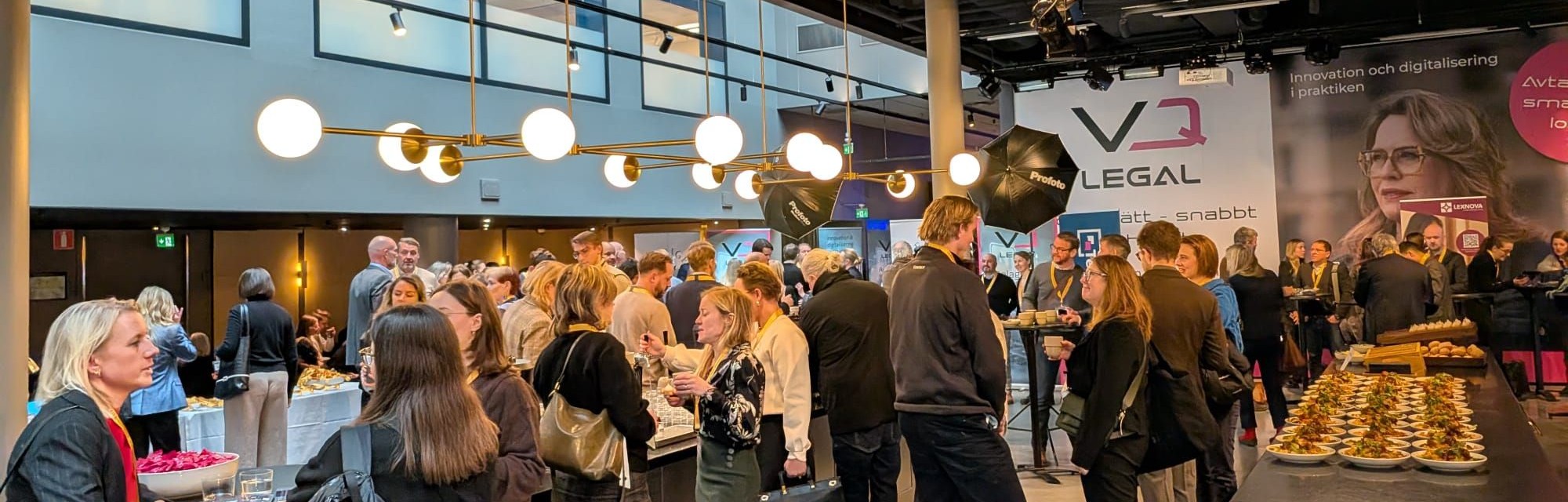
TechTorget arrived in Stockholm for the first time (TechTorget in collaboration with the Swedish Bar Association and VQ Legal), and the response made one thing clear: the Nordic legal market is not cautiously observing AI anymore. It is actively engaging with it.
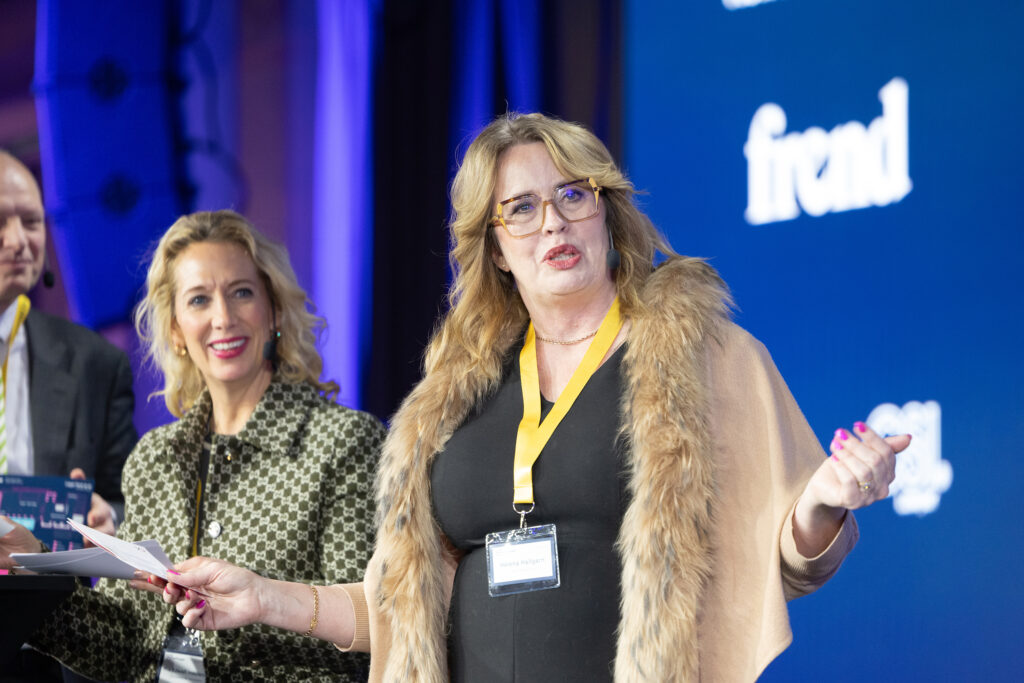
Peter van Dam, TechTorget, Mia Edwall Insulander, the Swedish Bar Association and Helena Hallgarn, Virtual Intelligence VQ (Photo CJ Erikson)
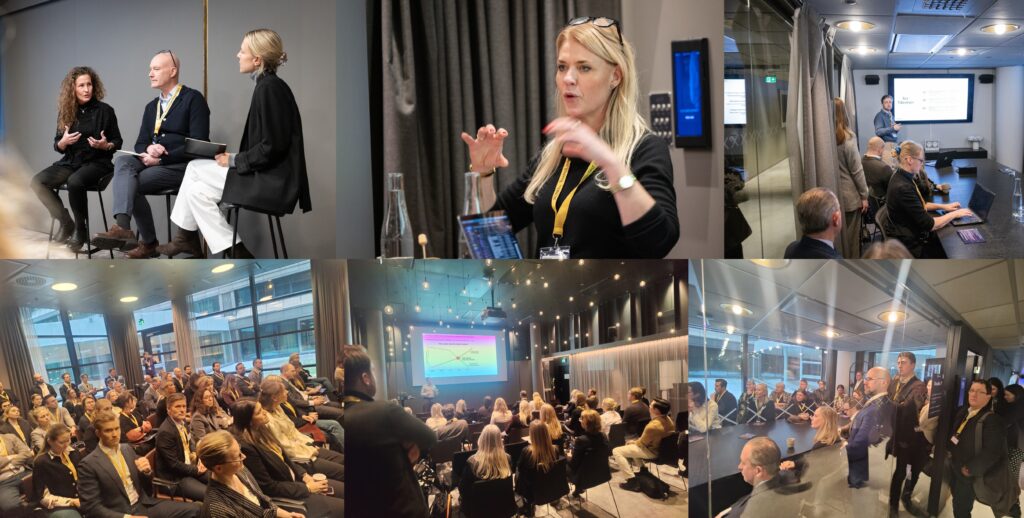
 More than 750 registered for the event, and close to 600 lawyers, legal tech professionals, in-house counsel, partners and innovators filled the venue for an intensive, content-rich afternoon of keynotes, panels, workshops and live demonstrations. Notably, we saw an unusually high proportion of practising lawyers in the audience compared to what is typically the case at legal tech events, which often attract a predominantly tech-focused crowd. This time, the core of the profession was strongly represented, a clear sign that AI and legal tech have moved from the periphery to the heart of everyday legal practice. The focus was not abstract futurism. It was practical and strategic: what is AI actually doing to the business and practice of law?
Setting the Scene: The Nordic Voice
The main stage, “Torget,” was expertly moderated by Patricia Shaughnessy, Associate Professor at Stockholm University, who brought both precision and warmth to the discussions.

The Secretaries General of the Nordic Bar Association adn Patricia Shaughnessy (Photo CJ Erikson)
The day opened with a rare and powerful joint appearance by the Secretaries General of the Nordic Bar Associations: Mia Edwall Insulander (Sweden), Merete Smith (Norway), Niko Jakobsson (Finland) and Andrew Hjuler Crichton (Denmark). Their reflections underscored something fundamental: technology is transforming delivery models, but the lawyer’s core values – independence, ethics, confidentiality, judgement – remain central.
The message was not defensive. It was forwardlooking. The lawyer’s role is not shrinking, it is being redefined.
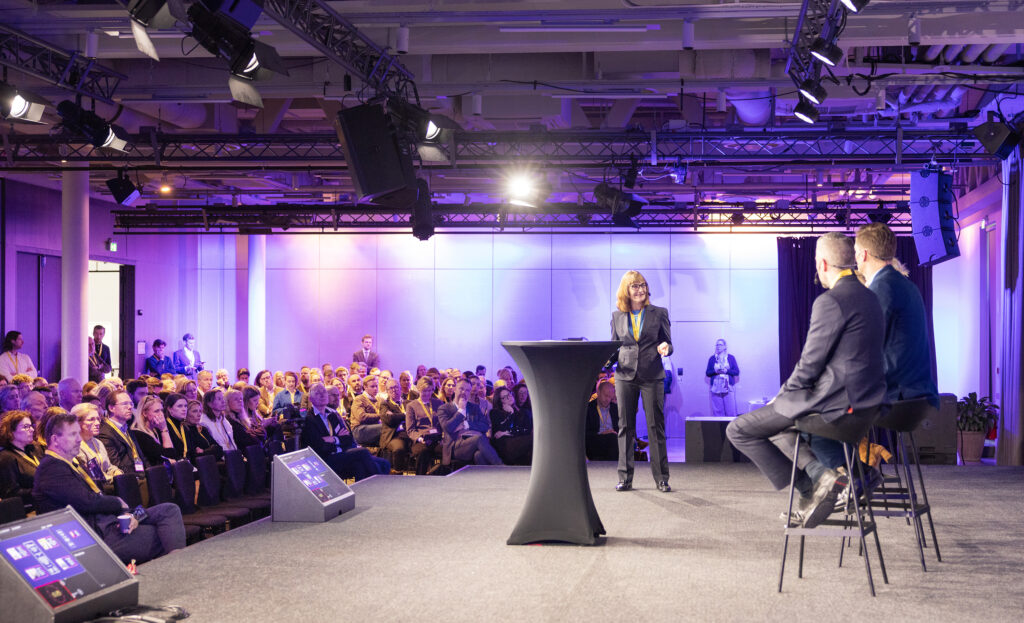
Helena Hallgarn invited participants to “make space for serendipity”, to widen their perspective and engage in conversations beyond their usual circles. Because often, the most valuable insights emerge where disciplines connect and collaborate.
Rethinking the Law Firm Model
Elisabet Lundgren, Managing Partner at Linklaters Stockholm, delivered a keynote on how AI is reshaping the global legal landscape.
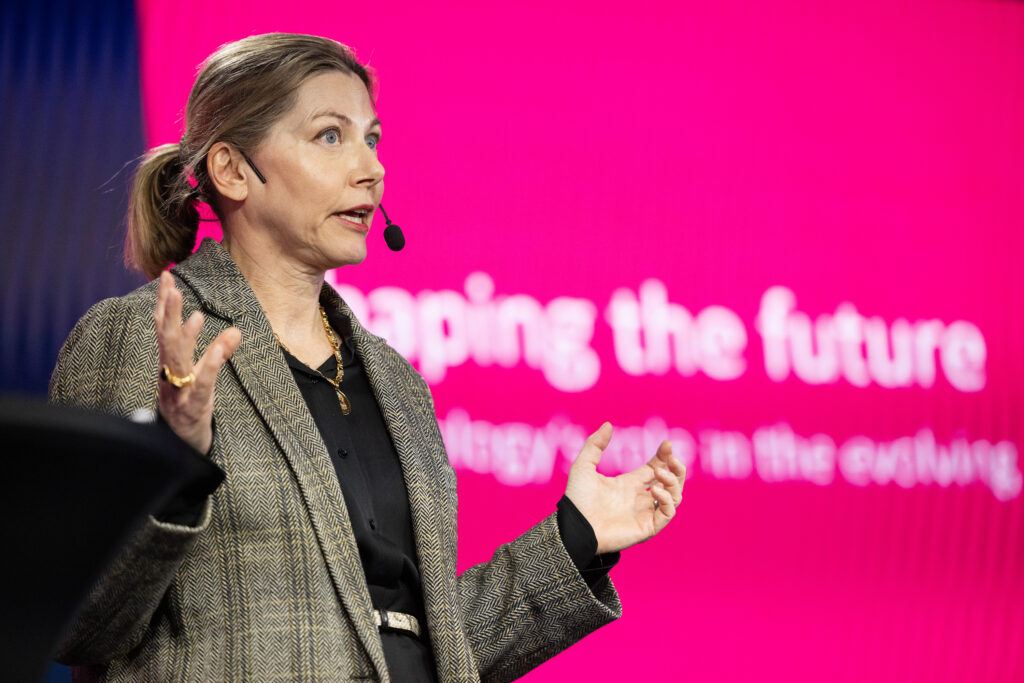
Elisabet Lundgren (Photo CJ Erikson)
Three shifts stood out:
- The traditional pyramid is under review.
AI reduces low-complexity, routine work at scale. The broad base of junior lawyers supporting a few seniors is no longer a given. - Teams are becoming smaller and more tech-enabled.
- The premium shifts to judgement and client value.
Lawyers who can safely use AI, collaborate across disciplines, and deliver sector insight and innovative pricing models will define the next generation of leadership.
Her closing reflection was simple but powerful: the strongest firms will combine sound judgement, deep client relationships and responsible use of technology.
2026: The Year of Agents?
 Wilhelm Bolin from Legora took the discussion further: 2026 may become the year of AI agents in legal work. We are moving beyond chatbots that assist, towards agents that act. Agents capable of:
-
-
- Handling long-context review and drafting
-
- Running end-to-end due diligence with human-in-the-loop oversight
- Maintaining stylistic and contextual memory
- Executing tasks through structured tools
But with autonomy comes risk. Independent agents without audit trails, compliance controls, privacy safeguards or review processes introduce significant liability questions.
The core insight: scale demands structure.
Trust, Governance – and Cybercrime at Scale
A dedicated segment on AI and cybersecurity made it clear that opportunity and risk now move together.
Iga Kurowska from Norstedts Juridik addressed the AI trust paradox: we rely on AI, yet must constantly verify it. Reliable outcomes require structured legal content, context, and professional oversight.
Åsa Schwarz emphasized that the real challenge is not technology. It is trust. Governance frameworks, management systems and cross-disciplinary collaboration are prerequisites for profitable AI adoption.
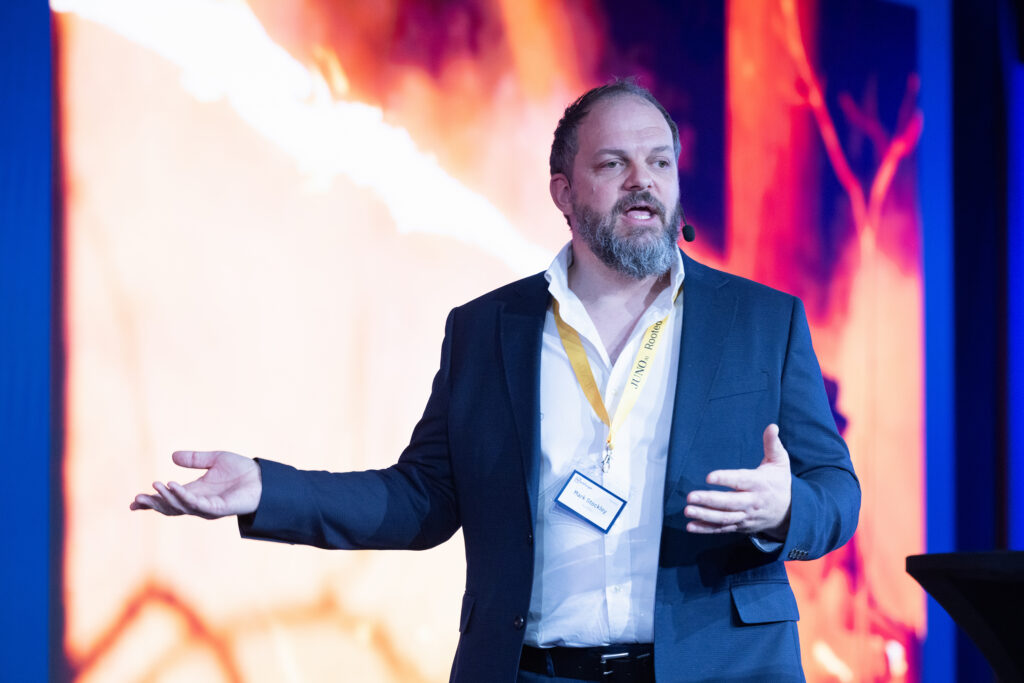
Mark Stockley (Photo CJ Erikson)
Then came a sobering reality check from Mark Stockley, host of The AI Fix. AI is already enhancing cybercrime. Ransomware attackers are using AI to scale operations, analyse stolen datasets and optimise monetisation strategies.
The most important takeaway? In an AI-driven world, you can no longer blindly trust what you see or hear digitally.
The Business of Law: No Manual Exists
The final keynote by Jeroen Plink of LegalTech Hub brought the discussion to the business layer.
Pre-ChatGPT, legal tech was largely operational. Post-ChatGPT, it is strategic.
AI:
- Reduces billable hours for certain tasks
- Becomes leverage in rate negotiations
- Enables clients to bring work in-house
- Requires significantly larger tech investments
- Creates a skills gap
No one has fully solved the puzzle. There is no manual. Firms are experimenting while the goalposts continue to move.
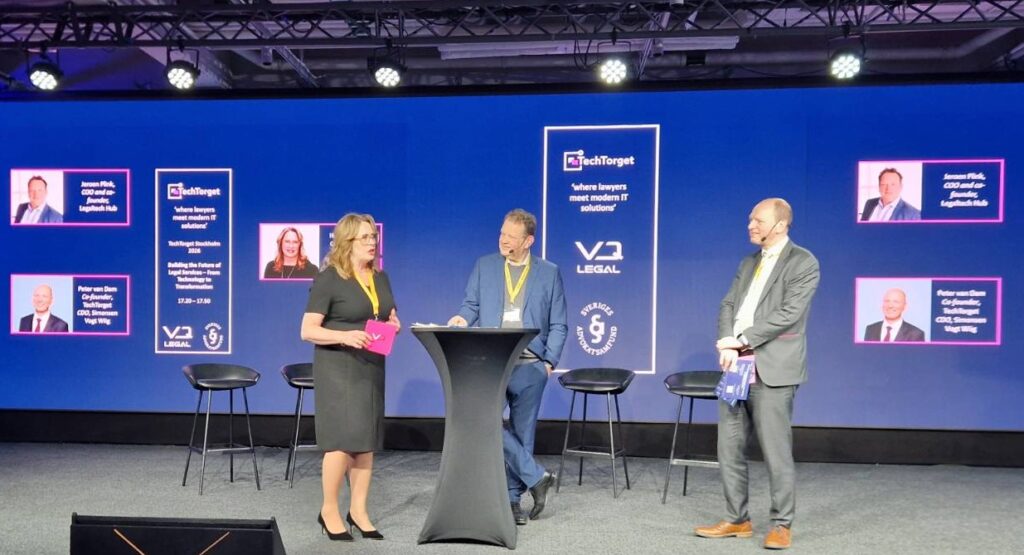
Helena Hallgarn, Virtual Intelligence VQ, Jeroen Plink, LegalTech Hub and Peter van Dam, TechTorget
The concluding discussion returned to fundamental questions:
- Where do clients experience friction?
- Which problems repeat?
- What value could be delivered faster, more transparently or at a fixed price?
The firms that succeed will start with the business case, not the tool.
Beyond the Stage: Adoption Is Human
Two parallel tracks and multiple workshops focused on implementation.
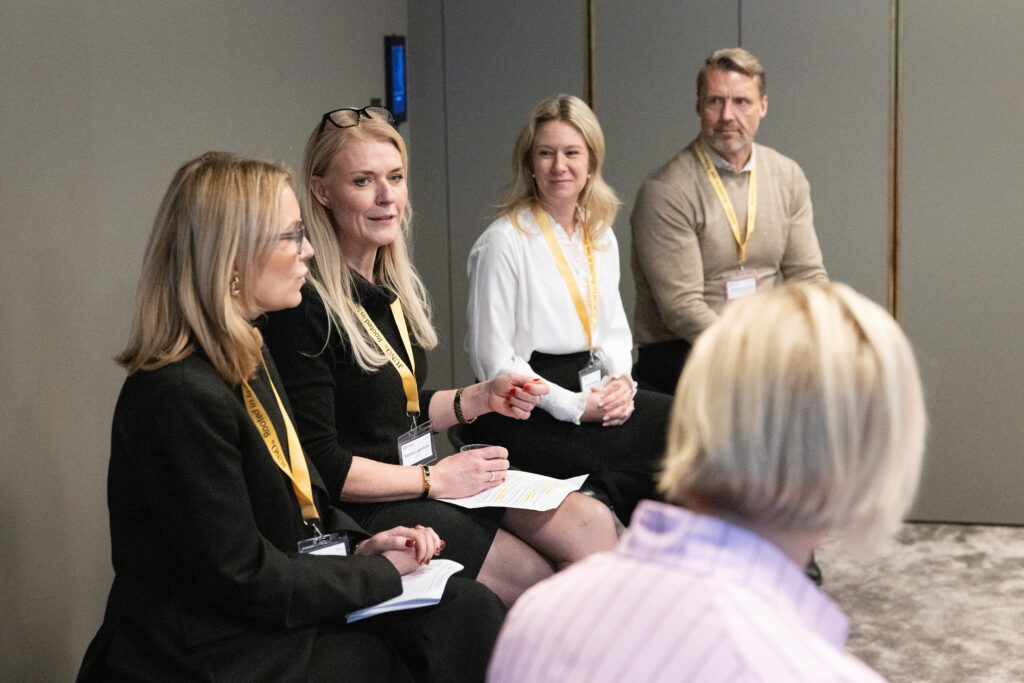
Panel with Philippa von Seth, Sophia Lagerholm, Hanna Canning and Christian Sundell, moderated by Malin Männikkö (Photo CJ Erikson)
In a panel moderated by Malin Männikkö (Newcode.ai), representatives from Delphi, DLA Sweden, Setterwalls and Cirio agreed: the problem is rarely the technology.
It is people.
It is expectations.
It is leadership.
It is culture.
Management example beats strategy documents.
Needs must drive the process.
The step from silence to dialogue is crucial.
The metaphor that captured the mood:
The best time to plant a tree was 10 years ago. The second best time is today.
Concrete Impact
The programme was filled with real business cases:
- AI scaled across 90% of employees
- Cross-firm collaboration with AI platforms
- Practical demonstrations of automated workflows
- Agent-building workshops
- Visual thinking for lawyers
- Rethinking partner performance through data-centric cultures
A recurring theme emerged: bespoke AI solutions are not “plug and play.” They require maintenance, governance, change management and security.
Real value comes when:
- AI adoption is embedded in daily work
- Tools are matched to specific processes
- Bottom-up initiatives flourish
- Human oversight is deliberate
- AI operates within firm-specific data and governance frameworks
A Nordic Moment
Seeing nearly 600 professionals gather confirmed what many already sensed: the appetite is real.
The Nordic market is digitally mature. Clients are sophisticated. The opportunity is substantial, but so is the responsibility.
Technology is not about speed alone. It is about possibility.
When legal services are designed around real client value, legal expertise becomes scalable, transparent and trusted. This is not about replacing lawyers. It is about reimagining how legal knowledge creates value.
The response to TechTorget Stockholm was overwhelmingly positive.
So naturally, welcome to TechTorget Stockholm 2027.