

Yesterday’s Nordic Legal Tech Day in Stockholm, hosted by LegalWorks, brought together the region’s legal tech community for a full day of networking, demos, workshops, and keynotes.

Much of the discussion revolved around AI. For example, one session with Heikki Ilvessalo from Ilves and Marion Ehmann, titled “Organizational Redesign Meets AI Time Tracking,” explored how to intentionally redesign structures, roles, and processes to make AI a true colleague and an integral part of operations. Another session, led by Arvid Winterfeldt from Qura, focused on how their team manages a legal ontology to support advanced legal AI research. The common thread throughout the day was how AI is reshaping the legal industry.
Where Lawyers Still Matter
The day opened with a keynote from Richard Tromans, who offered a sharp overview of where the AI-powered legal industry stands today and where it’s heading. He drew a useful distinction between “genius work”, the small, high-value part of legal practice that still demands human expertise, and the process-driven tasks that AI is increasingly able to handle.
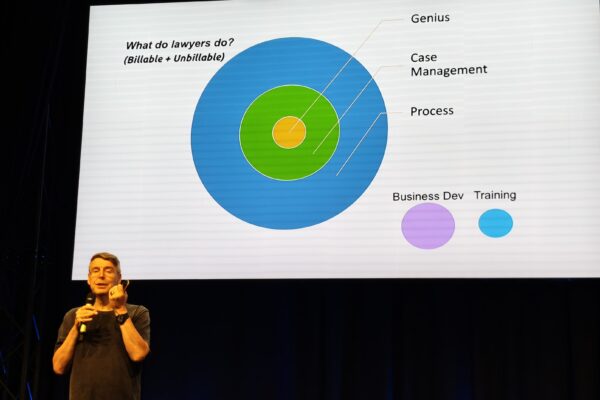
While demand for legal services continues to grow, most firms remain in the early stages of AI adoption. Recent data suggests that only around 17% of firms have integrated AI into their strategy and operations; many have not even begin experimenting.
Still, the landscape is shifting quickly. Tromans pointed to several emerging models that illustrate how AI is transforming legal service delivery. Hybrid firms such as Covenant, Crosy, and Lex Generalis are embedding AI into their core value propositions. Some tech companies, like LawHive and Eudia, are crossing over to become law firms themselves. On the consumer side, AI-driven solutions such as the Perplexity and LegalZoom collaboration are bringing legal support directly to individuals. Even private equity is showing growing interest in law firms, signaling confidence in the sector’s potential for transformation.
Tromans closed his talk with a few key reflections. Legal AI is real and improving fast. It only creates real impact when firms engage deeply and at scale. Today, using AI is still a choice; in the near future, it won’t be. And ultimately, the goal is not just to adopt new tools but to rethink the business model, and to be the best lawyers possible within it.

The Speed of Change
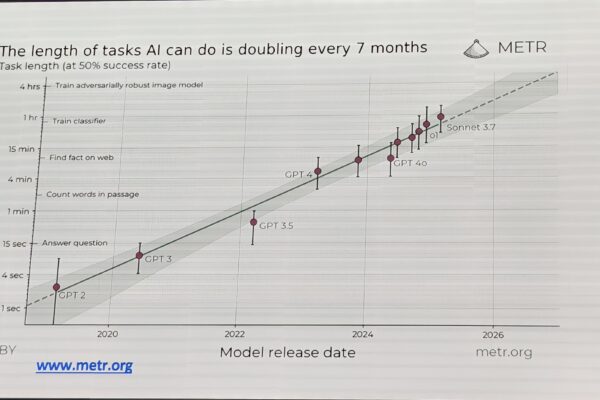
In another keynote, Antti Innanen explored just how quickly AI capabilities are advancing. The length and complexity of tasks that AI systems can handle are doubling roughly every seven months. As AI agents grow more capable, the industry is moving from “build” to “buy,” favoring ready-made, pre-trained solutions. Legal tech is also attracting talent from diverse backgrounds, which makes human skills such as creativity, ethics, and communication more valuable than ever.
Honoring the Legal Engineer
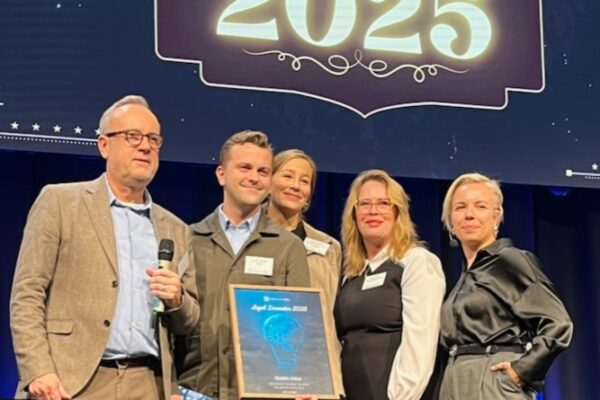
The event concluded with the Legal Innovation Prize ceremony, where the jury (Ulf Lindén, Miranda Espenäs, Helena Hallgarn and Malin Männikkö) chose to spotlight a role that has become increasingly vital: the Legal Engineer.
As Richard Susskind once described it, a Legal Engineer is someone who represents the law in expert systems or structures and organizes content for online services. In other words, a bridge between law and technology, someone who makes legal services more efficient, structured, and accessible. Although the role first emerged in Sweden back in 2011, it’s only now gaining real traction as legal tech adoption accelerates. Professionals who can translate between legal logic and technical design have become really valuable.
This year’s Legal Innovator of the Year Award went to Robin Moe, a Legal Engineer at Legora.
Final Thoughts
AI is the great enabler of our time, but the true differentiator remains human. As technology reshapes the legal profession, new skills are emerging at the center of this shift. Legal engineering, data literacy, and process design are gaining importance together with legal judgment, empathy, and creativity. The future of law will belong to those who can bridge these worlds, combining technological capability with human insight to deliver smarter, more accessible, and more effective legal services.